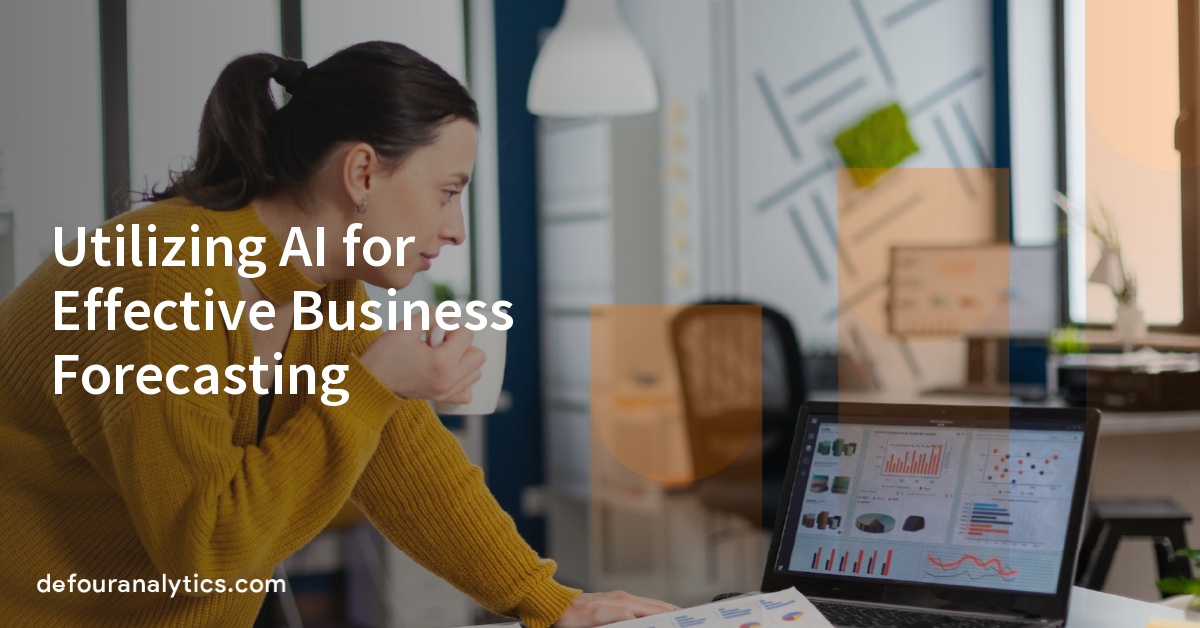
In the fast-paced world of business, anticipating future trends and behaviors is crucial. AI forecasting, leveraging machine learning algorithms and real-time business insights, offers businesses an edge in predicting outcomes such as customer behavior, sales trends, and market dynamics. Unlike traditional methods, which are often slow and limited in scope, AI business applications process vast amounts of data, including online activity and purchase histories, to provide precise forecasts. This is particularly relevant in today’s dynamic market, where swift adaptation is key. Companies like Amazon have made significant strides by using AI to predict demand shifts, illustrating the transformative power of AI-driven decision-making in predictive analytics. Embracing AI forecasting not only enhances accuracy but also offers a strategic advantage in a competitive landscape, making it an indispensable tool for the modern business.
Introduction to AI Forecasting in Business
Artificial Intelligence (AI) forecasting is revolutionizing the business landscape by leveraging data to discern patterns and outcomes invisible to traditional analytical methods. This technological breakthrough utilizes machine learning within AI and ML in business to process vast arrays of time series data. As businesses adopt business intelligence solutions, the accurate forecasting across various processes can occur without human intervention.
Industries experiencing rapid digital transformation benefit greatly from big data analysis coupled with AI-based predictive analytics. By harnessing AI for growth, companies can aggregate their business data efficiently, using this forecasting technology to optimize operations and enhance customer experiences. As a vital tool against uncertainty and volatile market conditions, AI predictive power is becoming indispensable across sectors.
Understanding artificial intelligence trends and their application in business forecasting equips organizations with the strategies needed to stay ahead in an ever-evolving market. Embracing these advancements ensures businesses remain competitive and adaptive, leveraging forecasts to inform decisions and drive success.
The Benefits of AI for Effective Business Forecasting
Leveraging AI for business forecasting presents numerous advantages, including higher precision and rapid data processing. By integrating multiple data streams from sources such as social media activity and web browsing histories, companies can achieve outstanding predictive model accuracy. This capability ensures businesses can implement advanced business tactics with confidence.
Enhanced Accuracy and Speed
Traditional forecasting methods often rely on manual data collection and analysis, which can be time-consuming and prone to errors. In contrast, AI superiority lies in its ability to process extensive datasets with cutting-edge forecasting techniques swiftly. By automating these processes, AI provides quick business insights that allow enterprises to stay ahead of market trends and make informed decisions efficiently.
Real-Time Insights
In today’s fast-paced business environment, having access to real-time insights is crucial. AI technologies enable companies to analyze data in real-time, offering immediate feedback on market conditions and consumer behavior. This capability allows businesses to adjust marketing strategies and production plans dynamically, thus preventing potential customer churn and addressing crises effectively. Efficient analytics driven by AI ensures that companies remain agile and resilient in navigating a continuously disruptive landscape.
AI Applications in Business Forecasting
Artificial intelligence is transforming the way businesses forecast across various domains, offering insights and enhanced efficiency never seen before. By leveraging AI-driven solutions, companies can gain a competitive edge in the market.
Predicting Revenue and Sales
AI-driven revenue forecasting is crucial for businesses aiming to optimize resource allocation and respond swiftly to market demands. With predictive sales analytics, firms can ensure they are well-prepared for fluctuating market conditions. Technologies from firms like Akkio and Salesforce enable seamless integration of AI into revenue forecasting processes, helping businesses make informed decisions, potentially boosting profitability.
Forecasting Customer Churn Rate
Customer retention strategies are significantly enhanced through churn rate analysis powered by AI. By analyzing customer behavior and trends, companies can identify potential churn risks early and take preemptive measures. Personalized engagement and improvement in customer support driven by AI market solutions help retain clientele and maintain a loyal customer base.
Predicting Commodity Prices
In industries where pricing volatility is a major concern, such as agriculture and energy, commodity pricing predictions by AI can prove invaluable. AI models assist businesses in forecasting commodity prices accurately, enabling them to purchase at the most opportune times and hedge against adverse market shifts. This application of AI ensures stability and profitability in sectors heavily influenced by fluctuating prices.
How AI is Revolutionizing Business Forecasting in 2023
As we journey through 2023, the transformative impact of AI innovation in forecasting becomes ever more evident. Businesses are leveraging cutting-edge technology to make real-time data-driven decisions that enhance their strategic planning. The burgeoning 2023 AI trends are reshaping the landscape, allowing companies to employ sophisticated predictive analytic advancements. This shift is more than just a technological upgrade; it represents a complete business model transformation.
Companies like Domo are leading the charge in this revolution by providing advanced smart forecasting technology that helps organizations build robust models effortlessly. These tools not only deliver precise prognostications but also unify data insights from diverse parts of the organization. As a result, stakeholders are better informed, enabling more accurate supply and demand balances, seamless product launches, and improved customer engagement strategies.
The era of AI in demand planning has officially arrived, and businesses slow to adapt may find themselves grappling with inefficiencies and a declining competitive edge. The move from human-driven forecasting to intelligent algorithm domination is no longer a mere futuristic concept but a daily reality. Embracing these predictive analytic advancements is not just beneficial but essential for thriving in today’s fast-paced business environment.

- 10 3CX Alternatives with Superior Analytics: Compare Features, Reporting, and Business Intelligence Tools - March 8, 2026
- Data-Driven Luxury Property Management: Elevating Tenant Experience and Asset Value - December 28, 2025
- Supercharging SaaS Analytics with On-Prem to Cloud Migration - November 12, 2025