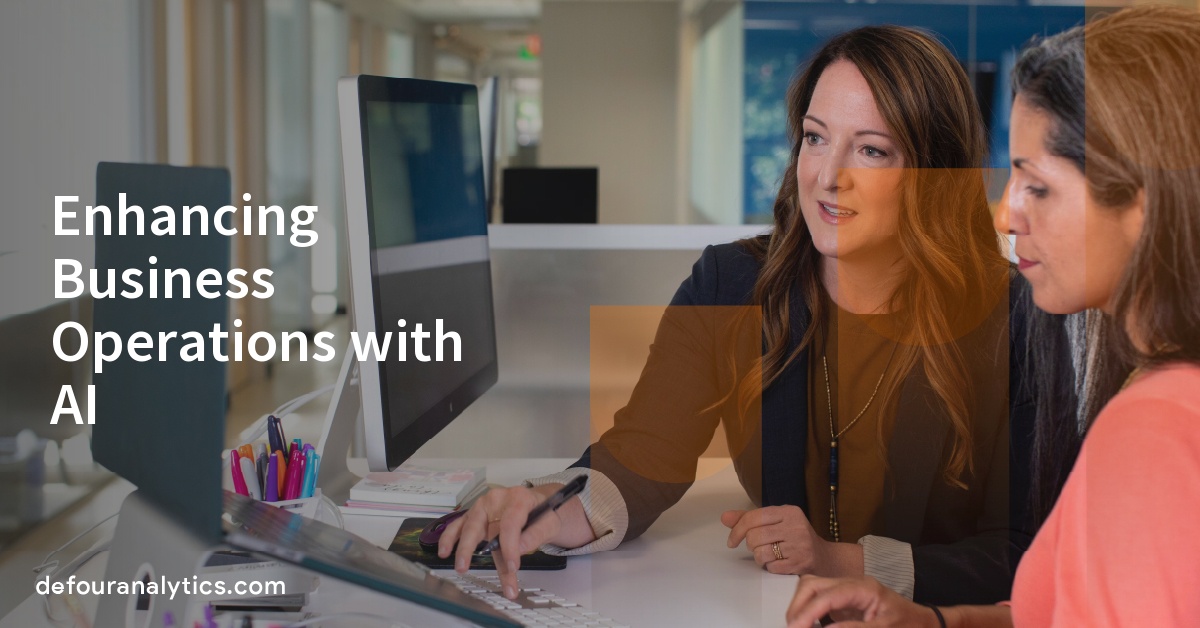
The adoption of Artificial Intelligence (AI) is swiftly transforming the business landscape, offering unparalleled benefits in enhancing operations across multiple industries. By streamling business processes, increasing efficiency, and minimizing errors, AI serves as a silent yet powerful partner. This is particularly evident through automation, adapting to new data, and optimizing decision-making.
AI for business efficiency spans an array of functions, from cybersecurity and digital marketing to financial management and project oversight. It leverages data to predict trends, refining strategic decisions and granting a competitive advantage. Specifically, AI technology in business aids in financial forecasting and risk assessment, proving to be an essential tool for robust business transformation.
Retail serves as a compelling example of how AI’s reach extends well beyond a single department. From demand forecasting and inventory optimization to personalized customer experiences and dynamic pricing, AI is reshaping how retailers compete and grow. A closer look at AI-driven retail strategy optimization reveals the same pattern seen across cybersecurity, marketing, and financial management — intelligent systems reducing inefficiency while enabling faster, more confident decision-making at every level of the organization.
Embracing AI is not just about keeping up with technological advancements; it’s about optimizing with AI to revolutionize and future-proofing operations. As we delve deeper into AI business transformation, it’s clear that this technology is indispensable for modern enterprises.
AI’s Role in Cybersecurity
In an era where digital threats are continuously evolving, the integration of AI in cybersecurity has become indispensable. Utilizing advanced Cybersecurity AI tools, businesses can now stay ahead of cybercriminals, ensuring robust protection mechanisms.
Real-Time Threat Detection
Real-time AI threat detection is a game-changer in the cybersecurity landscape. By learning from extensive datasets, AI-driven systems such as those employed by CrowdStrike and Darktrace can swiftly identify and mitigate potential security threats. These tools analyze data continuously, providing constant surveillance and immediate alerts.
Pattern Recognition and Anomaly Detection
AI excels in AI pattern recognition, a critical component in identifying anomalies that indicate malicious activity. Platforms like ThreatCloud AI leverage this capability to enhance predictive defense measures. By recognizing unusual patterns in data, AI systems can flag threats before they cause significant harm, ensuring enhanced cybersecurity.
Advanced Response Mechanisms
Beyond detection, AI enables AI response to cyber threats through advanced response mechanisms. These systems can handle complex security data and initiate proactive measures to combat sophisticated cyber threats. By fortifying defenses progressively, businesses can stay resilient against both current and emerging digital threats.
AI in Digital Marketing
Artificial intelligence has fundamentally transformed digital marketing, equipping businesses with tools that enhance personalization and improve user experiences. By leveraging AI, companies can cultivate deeper customer connections and drive revenue growth through tailored marketing strategies.
Personalization and User Experience
AI marketing personalization empowers businesses to deliver customized content and offers to consumers. This level of personalization not only boosts the AI customer experience but also increases engagement rates. Companies like Amazon and Netflix have successfully implemented AI-driven personalization to recommend products and content, significantly enhancing user satisfaction.
Lead Generation and Customer Behavior Prediction
AI for digital marketing extends to predicting customer behavior and generating high-quality leads. Through advanced algorithms, businesses can analyze user data to anticipate needs and preferences, facilitating AI lead generation. Platforms such as HubSpot use AI to score leads, predict conversion rates, and optimize targeting efforts effectively.
Automation of Routine Tasks
Marketing automation with AI takes the stress out of repetitive tasks, allowing teams to focus on creative and strategic activities. From scheduling social media posts to managing email campaigns, AI’s automation capabilities ensure tasks are carried out with precision and consistency. This not only improves operational efficiency but also frees up valuable human resources.
Financial Management Improvements
AI’s applications in financial management are nothing short of revolutionary, enabling businesses to efficiently manage complex financial data with unparalleled accuracy. Through sophisticated algorithms and machine learning, tasks such as sales forecasting, risk assessment, and high-frequency trading are greatly enhanced. By integrating AI in financial forecasting, companies can predict market trends and financial outcomes with greater precision.
One prominent benefit is AI asset management, where AI tools analyze vast datasets to optimize investment portfolios and identify lucrative opportunities. This level of detailed analysis, which is otherwise labor-intensive, is performed rapidly and accurately, driving better investment decisions.
Automating financial processes like data entry, invoicing, and reporting significantly boosts productivity. With AI-powered financial analysis, firms can generate insightful reports that aid in strategic decision-making. The automation of these routine tasks not only reduces human error but also enables financial professionals to focus on more strategic activities.
Leveraging AI in financial forecasting and integrating AI asset management provides businesses with a competitive edge. Advanced analytical tools offer deep insights and predictive analytics, essential for informed financial decisions, promoting both growth and stability.
Enhancing Business Operations AI: A Game Changer
Artificial Intelligence (AI) is now a cornerstone in modern business operations, offering an indispensable edge that extends beyond traditional industry standards. Companies today are not questioning the necessity of AI but are concentrating on effective AI implementation strategies to maximize benefits. Leveraging AI as a competitive edge has become a top priority for forward-thinking organizations keen on optimizing their processes and outperforming rivals.
Successful integration of business operations AI demands a clear definition of objectives and a strategic approach. Organizations should begin by setting concrete goals and identifying the right tools tailored to their specific business needs. Initiating with pilot projects allows businesses to test and refine AI solutions, ensuring alignment with their operational workflow before scaling up to more comprehensive applications.
Additionally, ethical considerations play a crucial role in AI implementation strategies. Ensuring transparency, data privacy, and unbiased algorithms is fundamental to building trust with stakeholders and customers. The dynamic impact of AI on operations, customer experiences, and profitability cannot be overstated. By providing innovative, data-driven solutions, AI positions businesses for sustainable and competitive success in the fast-evolving digital era.

- The Data Behind Comfort: How AI Is Optimizing HVAC Performance in Smart Buildings - September 11, 2026
- IT Forecasting and Planning Solutions That Connect Spend to Business Outcomes: Enterprise Edition - August 20, 2026
- Best Warehouse Cleaning Companies (2026 Guide) - August 15, 2026